Thursday, February 9, 2012

Together Again

We sent Jelly to join her long lost sister, Peanut Butter, early Wednesday morning.
I happened to wake up around 4:00 Wednesday and Legend wanted to go out (unusual for her).  While I was waiting for her I checked on Jelly and found her coated in drool and vomit and struggling to breathe.  I don't know what caused her sudden decline but I knew there was really one decision to make.  Jerry stayed with her while I make a quick trip to the clinic for the medications that would put her at peace.

I was curious what a necropsy might show, but 4:30 on a Wednesday morning was not a convenient time for such a project, so I just let it go.  Wouldn't change anything anyway.  I really feel like she probably had cancer but I just don't know where.  Maybe something will show up on the biopsies.

We are sad now, but in the long run it's probably for the best. It probably would not have been been that wonderful for her to live another 5-10 years in the garage and we had reservations about putting a house cat of that age to live in the barn.  But now she is catching mice with PB across the Rainbow Bridge, or just basking in the sun...

Monday, February 6, 2012

Losing

Our Jelly cat is sick.  She started not feeling well early last week-decreased appetite and lethargy.  She quit eating entirely in the middle of the week and baseline bloodwork and urine tests looked ok.  She responded initially to anti-emetics and appetite stimulants but then progressively got worse.  She has lost a few pounds over an unknown period of time as well.  With her age and lack of other symptoms we are worried about cancer or maybe IBD.  Sunday we decided to do surgery to look for a cause of illness and collect biopsies.  There are other possible diagnostics we could have done first but but when looking for intestinal disease you typically need a biopsy anyway we we just skipped to that.  Plus I can do the surgery cheaper than I can send out special tests or take her to a specialty center for ultrasound. 
The surgery was very boring.  Everything looked normal, which doesn't mean there isn't anything hiding.  That's the point of a biopsy I guess. So, I sampled the intestines in several places.
We are waiting on the results but it will be several days.  Meanwhile she is not doing well.  Very lethargic, refuses to eat and drink at all, drools and gags when syringe fed and is on a pharmacy of meds.  If the meds don't make a difference soon, it may not matter what the biopsies show.  Keep her in your thoughts.  She is a pain but we love her anyway.

Saturday, February 4, 2012

Sleeping beauties

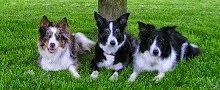
Staying in bed has seemed like a good thing to do lately.  It has been chilly, cloudy and rainy here for several days.  I took these as we were getting ready for bed the other night. But don't let this arrangement fool you, at least some of them will be in bed with us by morning!


Wednesday, February 1, 2012

The Birthday Boy

This handsome fellow is 11 years old today (approximately)!
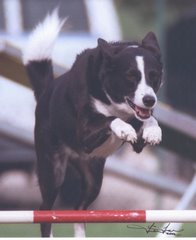
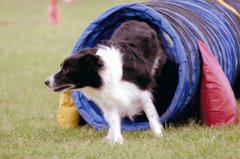
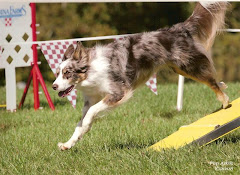
When we got Zodiac I wanted a dog that could do everything, and he didn't disappoint.  He really  is the whole package-brains, beauty, instinct and a great temperament to boot.  His titles and awards were really only limited by my time, commitment and interests.  Although now retired from dog sports he continues to serve as an active therapy dog bringing joy to hospitalized children.  He is my jack of all trades, foot warmer, puppy sitter and floor cleaner.

Happy Birthday Baby-Z!  Hoping for many more!

Tuesday, January 31, 2012

Addison's Disease: Owner's perspective


 In the grand scheme of things, there are certainly worse things than a diagnosis of Addison's Disease.

The period of time between your dog getting sick and being diagnosed can be very scary, indeed.  The symptoms of Addison's Disease (AD) can mirror that of so many other things -- things like cancer, tumors, liver failure, etc. -- all of which, in the long run, are far worse than AD.

Because this is a disease that your dog will have for the rest of its life, it is very important for the owner of an A-dog to become very educated about this disease and its treatment.  The good news is that modern medicine has made this a very treatable disease!  Once properly medicated, an A-dog can go on to live a completely normal life.  My dog, Luke, has earned five Championship titles in agility since being diagnosed in 2009!

The key to living well with AD is to work with your veterinarian to find the proper dose of medication for your dog.  There are two widely accepted forms of medications for dogs with AD. One is a daily dose of pills called Florinef.  Florinef contains a steroid component and thus no other medication is required.  Some dogs do very well on Florinef, although the consensus among the A-dog community is that most dogs end up needing higher and higher doses as they continue with treatment.  Sometimes this leads to the dog receiving too much of the steroid component, which can cause problems.  Those dogs ultimately tend to end up switching to alternate treatments.

My vet and I decided that the better option for my dog, Luke, would be Percorten-V, which is a shot that I give him every four weeks.  In addition, I must give him a small amount of Prednisone daily to make up for the cortisol that his body is no longer producing.  Luke gets 1.25mg per day, which is pretty miniscule.  In times of stress it is often helpful for the owner to up the amount of steroids given and this will vary by dog.  I have never come across a situation where my dog needs additional Prednisone.  Agility trials are happy stress for him, but he does fine on his usual dose.  Staying in a boarding kennel might be one situation where additional Prednisone is recommended.

Owners of dogs with AD can expect to become good friends with their veterinarians, as it will require frequent visits until the magic dose is found.  Once diagnosed and given the first dose of medication, generally you will return for weekly blood tests to make sure things are progressing as they should.  In these blood draws, we are checking the dog's electrolyte levels, always aiming for a happy range of Sodium (NA) and Potassium (K) levels.  These levels vary depending on your vet's machine, but we shoot for a ratio between 27-40.

When the blood tests reveal that the K is starting to rise and the NA is starting to drop, it's time for another shot of Percorten (or to give higher doses of Florinef).  Ideally you are hoping for this to happen within a range of 4-5 weeks.  Often times dogs are grossly overmedicated (per label directions) with Percorten and I've heard of some owners going three to four months before their dog is ready for another shot.  The negative aspect of this is that these overmedicated dogs often do not start to feel like themselves again until their levels start to balance out again, so the more we can avoid overmedicating, the better!  Finding the perfect balance of dose & duration is something that can take a bit of time, and until you settle on that sweet spot you will be making regular trips in for blood work.

Once you get there, though, life is pretty easy!  You graduate to doing blood tests quarterly, bi-yearly and then yearly at your dog's annual physical.  I write the date of my dog's next shot on my fridge and give him Prednisone every morning with his other supplements.  Aside from that, I don't do anything differently for Luke than my other dogs.  I do watch him closely, though, and I don't hesitate to take him into the vet for blood work if he seems to be feeling punky.  While most dogs settle on a single dose for Percorten and are fine there for life, sometimes there are dogs who will need adjustments later on.

There is a fantastic support group on Yahoo groups that I cannot recommend enough: http://pets.groups.yahoo.com/group/AddisonDogs_    Most of what I know, I learned from that great group of people.  It is moderated by owners of other A-dogs who have years of experience in treating this disease.  There are even a couple of respected veterinarians who make appearances (most notably, Dr. Nancy Kay, author of "Speaking for Spot" and also Dr. Julia Bates, known for being one of the first veterinarians to do a study on starting with lower doses of Percorten).  Often times owners of newly diagnosed A-dogs can feel tremendously overwhelmed.  Having a support network of other A-dog owners is invaluable and also helps those who unfortunately are dealing with veterinarians who are not well educated about the disease or its treatment.

It costs me approximately $40/month to treat Luke for Addison's Disease.  It is a paltry sum for the quality time I get to continue to spend with my dog!   :o)


Karissa

Monday, January 30, 2012

Addison's Disease

Also known as hypoadrenocorticism, Addison's is a disease characterized by a decrease in certain substances produced by the adrenal glands.

That makes the adrenal glands a good place to start.  The adrenal glands are very small glands associated with each kidney.  Normally you don't even notice them during abdominal surgery.  There are two parts to the adrenal gland, the medulla and the cortex.  The medulla is responsible for producing catecholamines like epinephrine.  The cortex is further divided into three zones, the glomerulosa, fasciculata, and reticularis.  The glomerulosa produces mineralcorticoids or aldosterone.  Mineralcorticoids control electrolytes and water balance.  The fasciculata produces glucocorticoids or cortisol.  Cortisol affects glucose, protein and fat metabolism.

Now, about the actual disease.  There are two types of Addison's-primary and secondary.  By far, primary is the most common form and is an idiopathic, immune-mediated destruction of the glomerulosa and fasciculata resulting in decreased production of mineralcorticoids and glucocorticoids.  The mineralcorticoid deficiency results in hypovolemia (dehydration and shock), decreased blood flow to the kidneys and decreased cardiac output (lowered circulatory ability).  The glucocorticoid deficiency results in GI signs such as anorexia and vomiting as well as lethargy.  Because glucocorticoids also help the body deal with stress, clinical signs may only show during stressful times in the pet's life in the early course of the disease.  Typical presentations include changes in mentation, lethargy, weight loss, weakness, anorexia, vomiting, dehydration, slow heart rate, increased thirst and urination and sometimes an episodic or waxing and waning course of disease.  Common labwork abnormalities include electrolyte imbalances ( increased potassium and decreased sodium), elevated kidney values, and mild anemia.  Unfortunately any combination of these symptoms and abnormalities can also be suggestive of other, more common disease such related to the GI system, urinary tract or even liver.  The fact that Addison's can imitate so many other diseases coupled with it's rarity can make it a diagnostic challenge and a disease that can sometimes be overlooked. This is particularly problematic because the dog will often respond will and stabilize with symptomatic therapy but crash again  later-recurrent events should be a red flag! Additional diagnostics include an ECG to check for abnormalities related to increased Potassium and imaging such as radiographs and ultrasound.  These may be suggestive of, but not diagnostic for Addison's.

To make a definitive diagnosis an ACTH stim test is performed.  ACTH is a hormone produced by the pituitary gland in the brain that stimulates the adrenal gland to produce more cortisol.  To perform the test you administer synthetic ACTH to force the adrenal gland to ramp up production.  But since that part of the gland is not functioning in Addisonian dogs, there is no response and cortisol levels remain low.

Immediate treatment for Addison's disease (assuming the dog has presented in crisis) is IV fluid therapy with appropriately balanced electrolytes and replacement of glucocorticoids.  Once stable there are two choices in treatments.  The first one is Florinef tablets (fludrocortisone acetate).  Some dogs do not respond well to this treatment and some develop undesired side effects at levels that adequately control the disease.  The better option is injections of Percorten (desoxycorticosterone pivalate or DOCP) which replaces the mineralcorticoids.  These injections are usually given in 25-28 day intervals and the owner can be shown how to give them at home if desired.  Prednisone is given in small doses to replace the glucocorticoid deficiency.  Sometimes, the amount of prednisone needs to be increased during stressful situations.

Follow up therapy involves checking electrolytes in specified intervals after the Percorten injections.  This will be more frequent at first until the desired dose for the individual dog is reached.  There are a variety of maintenance and monitoring protocols I have found and I won't even begin to speculate on which one is the "best" as I have never even diagnosed a case of Addison's!

Addison's is most common in middle age female dogs with no significant breed predilections. The prognosis for Addison's, once diagnosed and stable, is excellent although lifelong treatment is required.  Addison's is rare in cats.  Tomorrow we will have a special guest post from Karissa of Secret's Journey.  She will share her experiences as an owner of an Addisonian agility dog.

Saturday, January 28, 2012

Spay Day

Spay Day is an annual event held by many shelters and humane organizations around the country to raise awareness about spaying/neutering or offer low cost spay/neuter services for pets that would otherwise not be altered.

Today was the day the clinic I help with decided to hold their event.  It is usually held in February but last year I guess so many of the cats (we only do cats on spay day) showed up pregnant that they decided to do it earlier.

So, we had a marathon of cat spays and neuters today.   This was my first time doing that many so it was a bit of an adventure.  It would be one thing if we spread them out over a normal work day, took a lunch break etc, but we needed them all awake in time to go home this afternoon.  This meant it was pretty much nonstop work.  There were typically 2-3 animals being prepped and waiting for me as I worked on the current surgery.  Just by chance we ended up with 15 males and 15 females.  We started with the females so we could finish with the easy ones.  I've got to say, by about #13 I was getting pretty tired and my hands were not quite as steady as when I started out.  Then two of the males turned out to be females and one was already neutered.  So 29 surgeries in all!  We finished in under 5 hours though which equates to about 6 cats an hour.

And while this was personally a satisfying way to spend the morning, it was also rather financially satisfying so we took a quick trip to the local outlet mall.  Although we did manage to leave with only a few t-shirts and socks so I got to take most of my check home!

Now resting up for a 9-10 mile run tomorrow.  My dogs may never get trained again at this rate!

Thursday, January 26, 2012

Chew toys

I had a request to post about "safe" things for dogs to chew on.  Generally speaking, there is no such thing.  Sorry for the bad news.  End of post.

Just kidding.  It's true about the lack of truly safe toys, especially for aggressive chewers but I will elaborate on why and what is is better.

So what makes an object unsafe?  Basically if an object of soft enough not to break teeth it's soft enough to be chewed into pieces and swallowed possibly causing a foreign body.  It they can't chew it up then it's probably hard enough to break teeth.

Most commonly the tooth that breaks is the upper fourth premolar.  This is one of the largest teeth in the mouth and is labeled Carnassial tooth in the diagram.  When chewing on hard objects this tooth will frequently suffer a "slab" fracture where a slab of the tooth gets knocked off.  Best case scenario this is a superficial fracture that does not penetrate into the pulp cavity (where the nerve and blood vessels are) and is not a painful injury.
Worst case scenario is a deeper fracture which leaves a hole into the pulp cavity.  Not only does this cause pain (although dog may not act painful) but it allows a route for bacteria to invade and cause infection and tooth root abscesses.  A fracture such as this requires extraction or root canal therapy.  No one wants their pet to have a chronic toothache, surgery or go the expense of treatment!  Here is a picture of a slab fracture.

Ok.  So what does this all mean?  Lets start with rawhides.  I think rawhides are kind of medium hardness and get asked about them all the time.  I advise people that while there is a risk of tooth fracture it is fairly small compared to other objects.  I also tell them never to let the dogs have rawhide unattended as they can try to swallow a piece whole resulting in choking or foreign body.  I give my own dogs rawhides but usually choose the rolled ones-they seem somewhat durable but not as hard as the big knotted bones.  They also don't seem as prone to try swallowing the ends.

Up next, Nylabones.  These are one the veterinary dentist "don't" list and are apparently one of the top causes of fractured teeth.  Like rawhides though these come in varying hardnesses so in theory you could pick a softer one if you were worried.  However, I also give these to my dogs.  It has been some of the best money I have spent over the years!  Zodiac and Holli are chewing them as I write this.  I cringe a little when I see them really chomping down on the big one but I acknowledge the risk and am willing to pull the tooth or pay for the root canal.  I check the teeth often and so far we have not had a chewing accident.

Other items on the doggie dentist no-no list are cow hooves and natural bones.  Cow hooves are just plain hard.  Bones have a whole host of problems associated with them including fractured teeth, foreign bodies, and GI upset depending on the type, size, and cooked or raw status of the bones.

Deer antlers are also on the list of things hard enough to break teeth but I have no personal experience with those.

Another reasonable choice for chewing are the product usually referred to as "bully sticks."  These seem to be  chewy enough to last awhile but not hard enough to break teeth.  They also don't seem to chew chunks off and try to swallow them since they do get kind of stringy/chewy.

My favorite recommendation for a safe chew toy is the Kong. While there are some dogs that will chew up and ingest a Kong they are still great toys for the majority of dogs.  Always choose one the right size and toughness for your dog and watch them at first to see if they are aggressive enough to destroy it.  While there are other tough rubber toys that can be used for chewing the Kong is stuffable to make it enticing (dogs don't seem to like rubber much).  I like peanut butter for a quick fix but if you need your dog entertained for a longer period of time or have an aggressive chewer you can stuff it full of canned food and freeze it into a Kongcicle!  This is great because you can tailor it to your dog's dietary needs.  Plus they don't stain carpet or leave crusty rawhide goo on your dog's feet.

So that's best rundown I can give on safe and not-safe chew toys.  Basically use your best judgement for your dog and be prepared to handle a fracture or other issue if it arises.  Also one of the veterinary dentists recommends the "knee-cap rule" if you are concerned about dental damage.  Basically if you wouldn't want to bang it into your knee cap it's not something you should give your dog to chew on.

Wednesday, January 25, 2012

Running buddy

I decided to take Legend with us on our run yesterday.  Don't worry-I didn't plan, nor expect her to run the whole nine miles with us!  But I did want to see 1) if she would like it and 2) how she would behave.  Oreo used to love running with me, Zodiac not so much.

Well I'm pleased to report that not only did she seem to enjoy it but she was very well behaved!  Typically when I try to walk or hike with her on leash she is straining at the end of the lead, running all over trying to look at stuff and sniff and play.  But the pace seemed to suit her and she trotted along on a nice loose lead the whole time.  I put her pack in the car after 3 miles.  She was starting to lag a bit and I didn't want to  overdo it.  Although she was totally rejuvenated by the time we finished so I probably should have got her out for the last few miles!

Anyway I do see more running in her future as the weather warms up and we get more outdoor runs in.  It's probably good for her to build up some additional endurance anyway.

Tuesday, January 24, 2012

Around here

I didn't want to bore you with all the details of our life lately since not much has been going on but here is a quick summary.

Not much agility going on.  Since we don't have much coming up in the way of trials we are only training on days that the weather seems acceptable.  My definition of acceptable is probably different from that of my northern friends but nonetheless everyone has a standard!  We have not had many nice days lately that have corresponded with days I have been home.  I've been trying to work a lot lately to save up for vacations, home improvements and the tremendous amount of taxes we usually owe.

Also, my half-marathon training takes a good portion of my free time.  I'm up to about 20 miles a week and today we are heading out on a nine mile run.  We are also planning to book our flights today and have paid our entry fees so there is no turning back now.  This is the race we have chosen-it looks really pretty.  And as a special treat our moms are going with us to cheer us on-it is Mother' day weekend after all.

We had an adopter for Holli, but that fell through at the last minute so she is still here waiting for her forever home.  But I'm pleased to announce she does seem house-broken now.  I wouldn't leave her loose unattended all day or all night but she has not had an accident in over a month and I no longer need to take her out every 20 minutes!

I still have made no decision on the obedience thing.

I am in the midst of deep cleaning my house room by room.  This is mostly a hair and dust eradication project.  I'm glad to be done with three rooms but they were sort of easy.  Debating on starting another or just killing time until I have to go run.

So that's what's been going on here.  Not too exciting.  And it's not likely to get much more exciting for another 6 weeks or so.  If anyone has veterinary topics they would like covered feel free to suggest!