Once in the intestine the organisms multiply within an intestinal cell and destroy it. Each of the new organisms infects another cell and the process continues, destroying an exponential amount of intestinal cells. This process results in a watery, and sometimes bloody diarrhea. Coccidia organisms are shed in the feces of an infected pet and once in the environment can be infective within 12 hours. It takes 3-11 days for appearance of coccidia in the feces after ingestion.
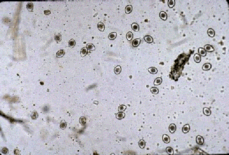
Coccidiosis is most common in young puppies and immunocompromised animals. Diagnosis is made via finding organisms on a fecal flotation but sometimes small numbers can be hard to find leading to a false negative result. Sympotmatic animals are often treated based on signs of infection, especially if they have already been dewormed with routine products several times are parvo virus negative.
The most common drug for treating Coccidia is Albon but there are some other drugs that have been used. Albon is often administered for 5-10 days. Because the organisms become infective so rapidly, re-infection is a common problem. Picking up all fresh stools is vital in eliminating infection.
Coccidia are resistant to all routine disinfectants but can be eliminated by steam cleaning-which is obviously impractical for the backyard! For this reason, all in-contact animals, especially puppies are often treated prophylactically as a means of eliminating and preventing infection in a household, kennel, or shelter.
Prognosis is usually good unless the animal is severely infected and dehydrated. Most treatment is done as an outpatient unless IV fluids are needed
Zoonotic Potential
The species of coccidia that infects dogs is not infective to people.


.JPG)
.jpg)
.jpg)


.jpg)


.JPG)
